Türkiye’s action agenda offers hope as COP process falls short: Sweden's climate envoy
Mattias Frumerie welcomes electrification, zero-waste initiatives as platforms to accelerate implementation alongside negotiations


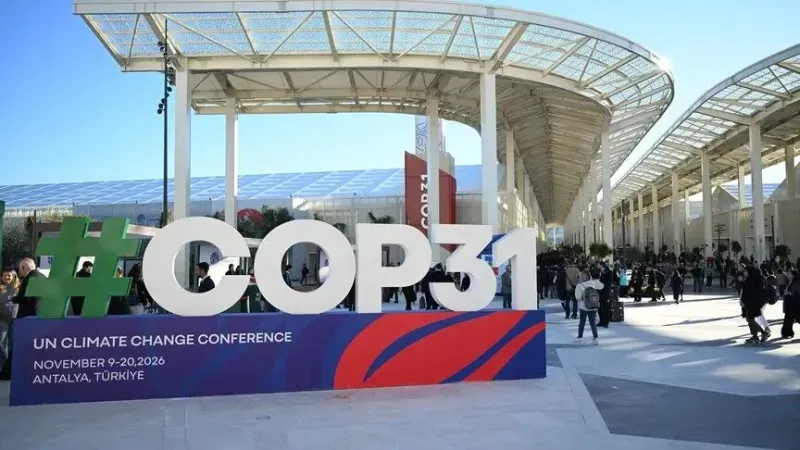
UN climate negotiations are falling short of delivering the decisions the world needs, but Türkiye’s focus on practical action at COP31 offers an encouraging avenue for progress, Sweden’s climate ambassador has said.
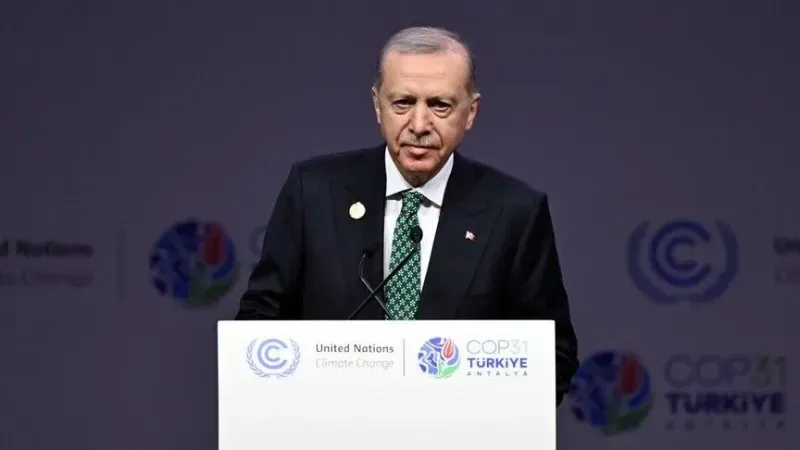
Speaking to Anadolu at the summit in Antalya, Mattias Frumerie, Sweden’s chief negotiator, called for a more efficient process that helps countries implement their climate commitments.
“We’re not getting the kind of decisions that we want and need from the COP process,” he said.
However, Frumerie welcomed the Turkish COP presidency’s emphasis on its action agenda, highlighting initiatives on electrification and zero waste.
He said these efforts provide platforms alongside formal negotiations where countries, businesses and other actors can cooperate and showcase measures to accelerate implementation.
“We want to see a more efficient process which delivers better in terms of implementation,” he said, stressing the need for cooperation on both reducing emissions and strengthening resilience and adaptation.
His remarks echo Sweden’s official COP31 position.
The Swedish government has warned that the UN climate process’s expanding agenda has become difficult to manage, particularly for smaller delegations, undermining transparency and inclusion.
Stockholm wants greater attention on the Paris Agreement’s core processes, including national climate and adaptation plans, reporting on implementation and the global stocktake, which assesses collective progress toward the agreement’s goals.
Turning climate plans into action
Frumerie said Sweden’s main priority was accelerating implementation of nationally determined contributions, the national climate plans underpinning the Paris Agreement.
“We know that we need to step up in terms of ambition, but we also know that the solutions are there,” he said.
Pointing to companies at the Swedish pavilion, he said businesses were presenting technologies that could help countries advance their transitions.
The implementation push builds on earlier commitments.
At COP28 in Dubai in 2023, countries agreed to pursue a transition away from fossil fuels in energy systems, alongside efforts to triple global renewable energy capacity by 2030.
Sweden also supports using road maps on transitioning away from fossil fuels and halting deforestation, developed under the COP30 presidency, as platforms for countries to exchange solutions and advance concrete measures.
Frumerie identified the pace of change and mobilizing finance as two major challenges facing negotiators.
“We’re hearing from science that we need to accelerate the work that we’re doing,” he said.
More countries need to rally behind the urgency of climate action, while investment must support the priorities set out in their national plans, he added.
At COP29 in Baku in 2024, countries agreed on a goal of mobilizing at least $300 billion annually for developing countries by 2035, with developed countries taking the lead.
The agreement also called on all actors to help scale up financing from public and private sources to at least $1.3 trillion annually by that year.
COP31 runs through Nov. 20 in Antalya, with Türkiye hosting the conference and Australia leading the negotiations.
Cooperation beyond COP31
Frumerie also expressed interest in continuing cooperation with Türkiye on the energy transition and industrial decarbonization after the summit.
“From a Swedish perspective, we are very proud of the strong bilateral relationship we have with Turkey,” he said, adding that collaboration could extend to the EU and partners globally.
Asked about the expansion of artificial intelligence and data centers, he called for efficient energy and water use while exploring how AI could help accelerate climate action.
The International Energy Agency projects that electricity consumption by data centers will roughly double between 2025 and 2030, reaching around 3% of global electricity demand.
Its 2026 assessment puts that increase at 485 terawatt-hours to 950 terawatt-hours, with electricity consumption by AI-focused data centers projected to triple over the same period.
Frumerie said countries should also harness AI’s potential to bring data together and develop solutions across different sectors to support the transition to net zero.